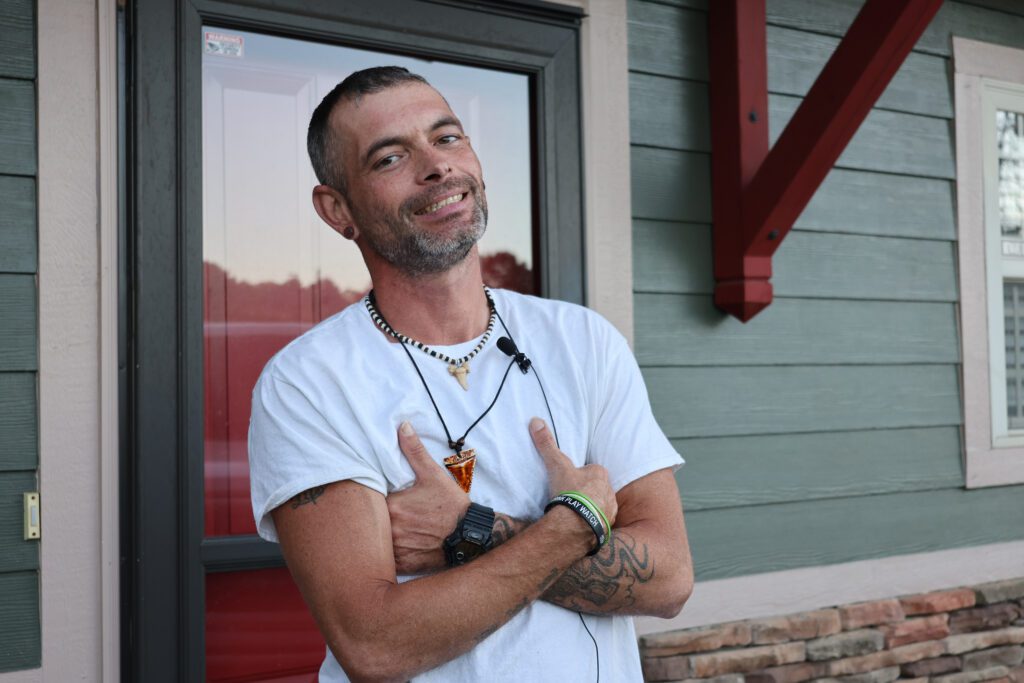
John is a 38-year-old blue-collar dad who feels like he’s been given a second chance at life. For the past three years, he has been working toward and accomplishing a list of goals that includes sobriety, being a better father, and learning to love himself. His story is evidence that housing and support provide the foundation for growth, and that ending homelessness doesn’t just affect the individual but also their family and community.
John became homeless after developing an addiction to fentanyl and methamphetamine at 30 years old. He lost most of his relationships once his addiction became the primary focus of his day-to-day life. John struggled with his addiction for five years until he was arrested and incarcerated on a felony charge. He was told by the state that he would lose custody of his two sons if he didn’t turn his life around.
John’s life in prison was tough and isolating, but it gave him time to reflect. He decided that his children were more important to him than anything. Once released, John began visiting the AHOPE Day Center, checking in with Homeward Bound staff to receive assistance with housing and basic resources. He desperately needed a fresh start, but faced significant barriers to housing and employment because of his record.
“I didn’t want to be homeless on the streets,” says John. “I didn’t want to be addicted to drugs. Drugs came with it. I told AHOPE, ‘Get me out of the streets so I can see my kids, so I can get away from this lifestyle. Just give me a chance.’”
A year and a half later, John received a call from AHOPE staff with news that he had been approved to live at Homeward Bound’s Compass Point Village. Soon, everything began to fall into place. John didn’t have to sleep outside. He had a home he could take pride in, and most importantly, this was the stepping stone he needed to focus on his goals. Thanks to a family member, John found a job building manufactured homes.
We are pleased to share that John has graduated from Compass Point Village. Our housing specialists found him a new townhome where his two sons have their own room. The three of them spend every weekend together, and John says there is no happier feeling than watching them at their baseball games. John also talks to his oldest son and daughter, who live in Florida, every day.
“I’ve got all kinds of goals that I’ve reached,” says John. “I see my kids every weekend. I’ve been sober for two years. I’ve been working my butt off. I make really good money doing what I’m doing. My credit score is through the roof. I mean, I did it. It took a lot of hard work and determination, but I never gave up. And I’m not going to.”
John says working on his list of goals keeps him steady. His next goals revolve around making sure his family is under one roof. He hopes to buy a home, slow down with his work, and spend even more time with his kids. John sees himself as a good father and feels proud of everything he has achieved.
“I’ve learned to love myself, John says. “I’m okay with myself. My whole thing is now that I’ve figured out how to love myself, I want other people to be attracted to that. That’s why I’m doing this interview. I want my energy to flow out. I’m working on giving positive energy, positive enough that people smile when they’re around me. I want people to follow my steps. I want to get my story out so people see that it’s possible. It’s very possible.”
John’s message to Asheville is that “people experiencing homelessness are still people at the end of the day. They’re still somebody’s mom, somebody’s dad, grandma, brother, or sister. It doesn’t matter what walk of life they’re in, they’re still people. Don’t look down on anybody. Try to lift them up.”
John is confident he will graduate from Permanent Supportive Housing. He’s thankful for the support of his Case Manager, Amanda; Homeward Bound Property Manager, Debbie; and the staff at AHOPE for trusting him and keeping him on track.
“They allowed me to come and tell them what I wanted to accomplish, and they gave me ways to accomplish it,” John says. “Once people get into houses, they can start focusing on what they need to focus on. It’s just one thing after another. First is the house, then the job, then whatever else comes after that. People have different goals, but I noticed that once you get housing, it’s easier to reach your goals. Everything else is like a puzzle after that; it just fits in perfectly. I’m living proof of it. If it wasn’t for Compass Point Village, my puzzle pieces would still be scattered.”
Joe Hart is the Communications Specialist for Homeward Bound of WNC. He loves telling our client's stories and encourages everyone in the community to get to know the people living near them who are experiencing homelessness. Reuniting individuals with their community is the first step to helping end homelessness everywhere.
Our measure of success generally is determined by measuring the percentage of clients in our permanent supportive housing programs who remain housed 12 months after placement. Given the many variables that impact chronically homeless clients, and consistent with other studies, we count as “housed” those who have graduated from supportive housing to other housing, those who move to health care facilities, those who have moved out of the area, and can no longer be tracked; those incarcerated, and those who have died. For example, at The Woodfin, of the 37 clients who have been housed over five years, 92% remain housed. Seventeen clients live at The Woodfin now; five have “graduated” to other housing; two have moved to nursing facilities; seven have died, and two have been imprisoned. Only four clients have been evicted.