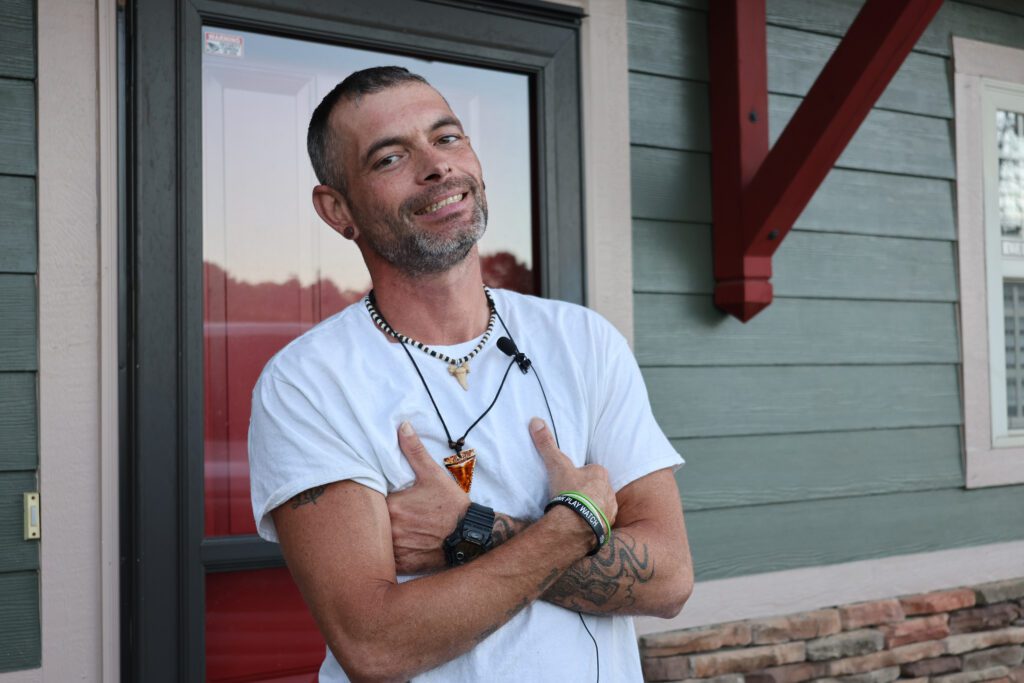
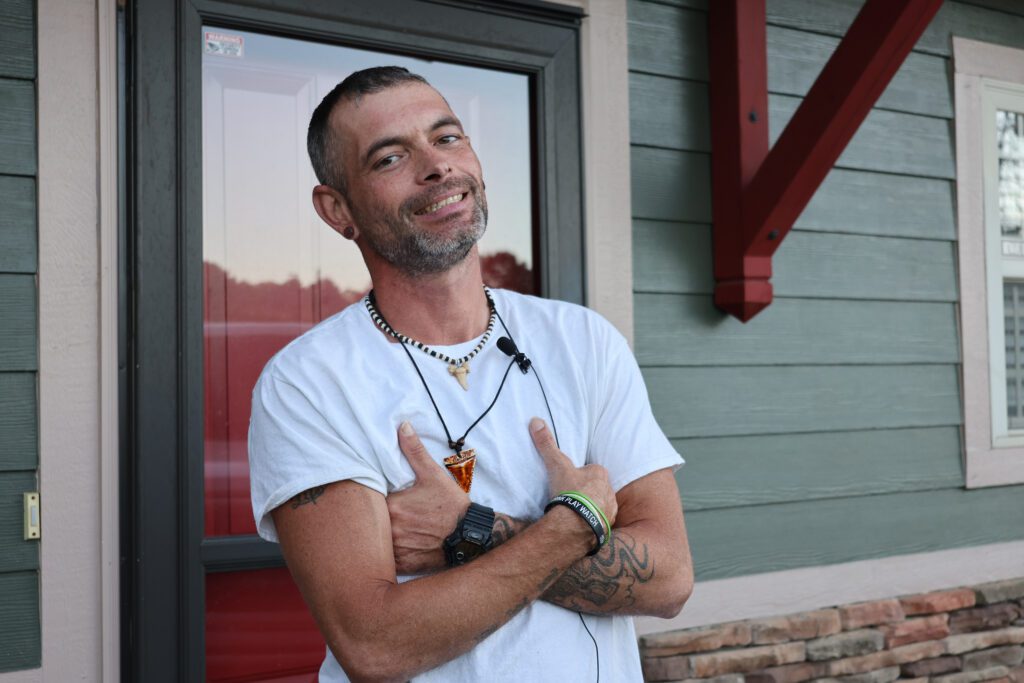
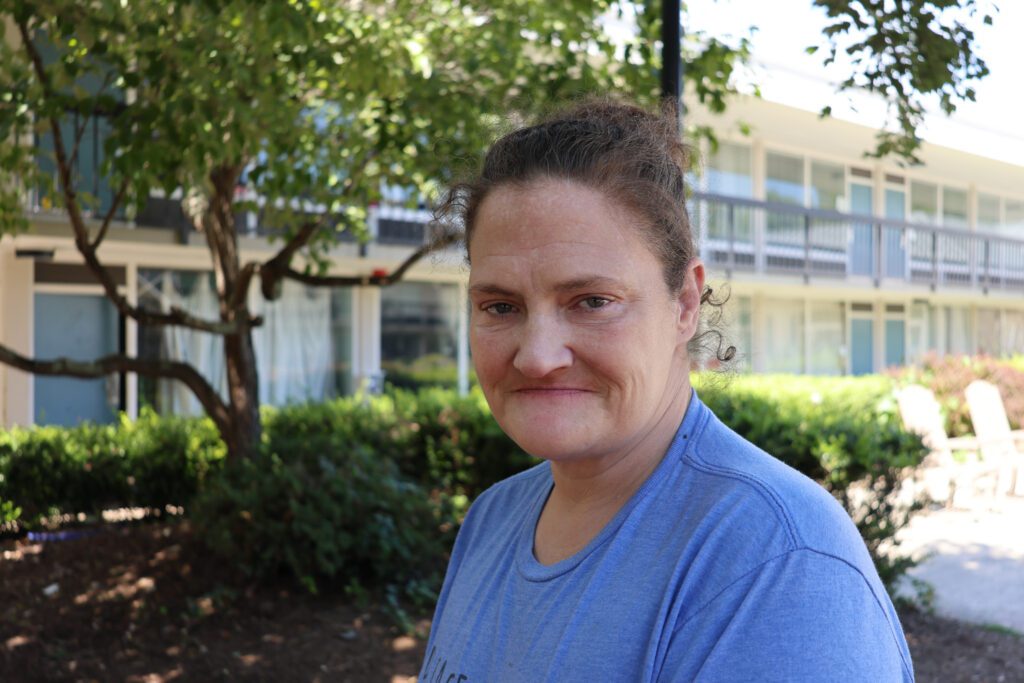
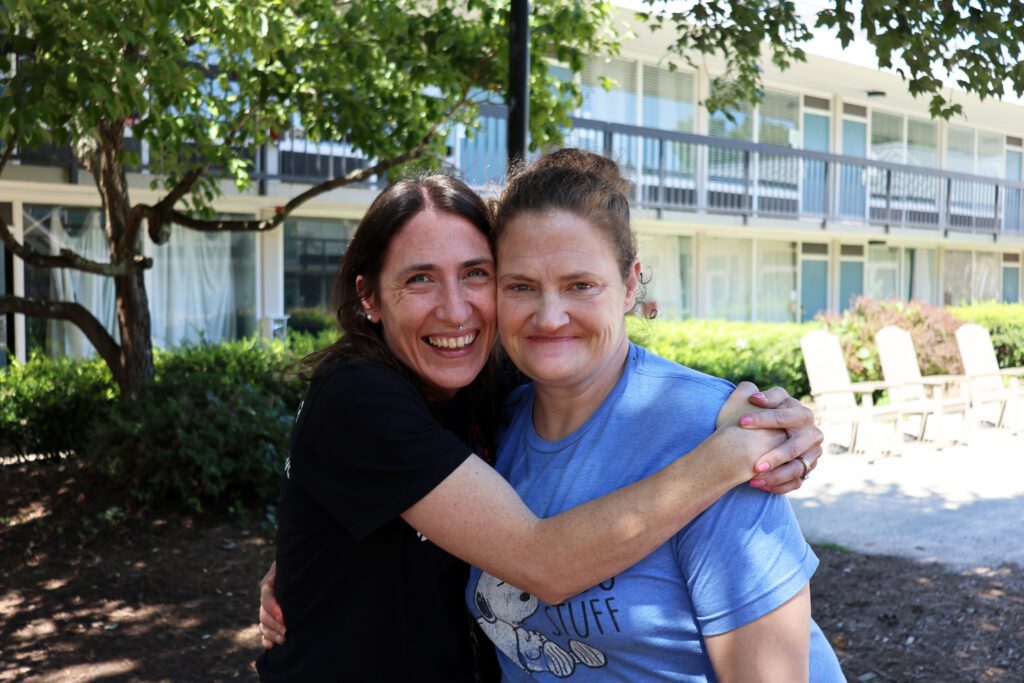
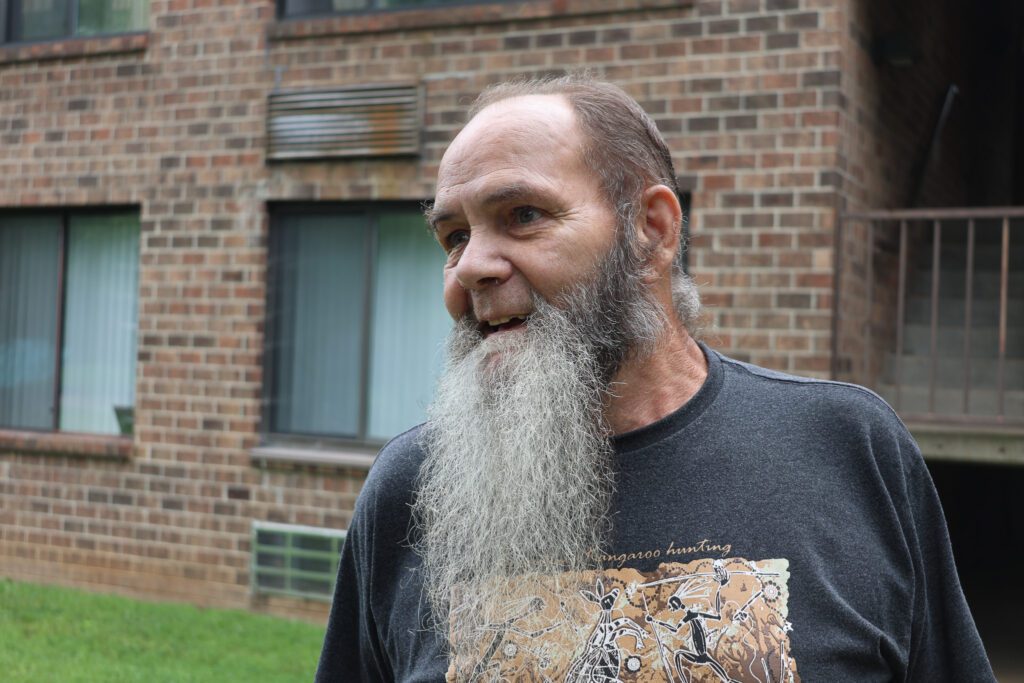
John is a 38-year-old blue-collar dad who feels like he’s been given a second chance at life. For the past three years, he has been working toward and accomplishing a list of goals that includes sobriety, being a better father, and learning to love himself. His story is evidence that housing and support provide the foundation for growth, and that ending homelessness doesn’t just affect the individual but also their family and community.
John became homeless after developing an addiction to fentanyl and methamphetamine at 30 years old. He lost most of his relationships once his addiction became the primary focus of his day-to-day life. John struggled with his addiction for five years until he was arrested and incarcerated on a felony charge. He was told by the state that he would lose custody of his two sons if he didn’t turn his life around.
John’s life in prison was tough and isolating, but it gave him time to reflect. He decided that his children were more important to him than anything. Once released, John began visiting the AHOPE Day Center, checking in with Homeward Bound staff to receive assistance with housing and basic resources. He desperately needed a fresh start, but faced significant barriers to housing and employment because of his record.
“I didn’t want to be homeless on the streets,” says John. “I didn’t want to be addicted to drugs. Drugs came with it. I told AHOPE, ‘Get me out of the streets so I can see my kids, so I can get away from this lifestyle. Just give me a chance.’”
A year and a half later, John received a call from AHOPE staff with news that he had been approved to live at Homeward Bound’s Compass Point Village. Soon, everything began to fall into place. John didn’t have to sleep outside. He had a home he could take pride in, and most importantly, this was the stepping stone he needed to focus on his goals. Thanks to a family member, John found a job building manufactured homes.
We are pleased to share that John has graduated from Compass Point Village. Our housing specialists found him a new townhome where his two sons have their own room. The three of them spend every weekend together, and John says there is no happier feeling than watching them at their baseball games. John also talks to his oldest son and daughter, who live in Florida, every day.
“I’ve got all kinds of goals that I’ve reached,” says John. “I see my kids every weekend. I’ve been sober for two years. I’ve been working my butt off. I make really good money doing what I’m doing. My credit score is through the roof. I mean, I did it. It took a lot of hard work and determination, but I never gave up. And I’m not going to.”
John says working on his list of goals keeps him steady. His next goals revolve around making sure his family is under one roof. He hopes to buy a home, slow down with his work, and spend even more time with his kids. John sees himself as a good father and feels proud of everything he has achieved.
“I’ve learned to love myself, John says. “I’m okay with myself. My whole thing is now that I’ve figured out how to love myself, I want other people to be attracted to that. That’s why I’m doing this interview. I want my energy to flow out. I’m working on giving positive energy, positive enough that people smile when they’re around me. I want people to follow my steps. I want to get my story out so people see that it’s possible. It’s very possible.”
John’s message to Asheville is that “people experiencing homelessness are still people at the end of the day. They’re still somebody’s mom, somebody’s dad, grandma, brother, or sister. It doesn’t matter what walk of life they’re in, they’re still people. Don’t look down on anybody. Try to lift them up.”
John is confident he will graduate from Permanent Supportive Housing. He’s thankful for the support of his Case Manager, Amanda; Homeward Bound Property Manager, Debbie; and the staff at AHOPE for trusting him and keeping him on track.
“They allowed me to come and tell them what I wanted to accomplish, and they gave me ways to accomplish it,” John says. “Once people get into houses, they can start focusing on what they need to focus on. It’s just one thing after another. First is the house, then the job, then whatever else comes after that. People have different goals, but I noticed that once you get housing, it’s easier to reach your goals. Everything else is like a puzzle after that; it just fits in perfectly. I’m living proof of it. If it wasn’t for Compass Point Village, my puzzle pieces would still be scattered.”
Supporters participate by making a donation of at least $20 and guessing the total number of birdies* made by PGA TOUR players during the 2026 Truist Championship (May 7–10, 2026). Choose Homeward Bound of WNC as your charity and submit your guess to play along.
*A birdie is one stroke under par on a golf hole. Par is the average number of strokes needed to reach the hole.
Prizes:
Grand Prize: The closest guess wins your choice of a one-year Audi Q5 lease from HendrickCars.com or $10,000 cash.
Second Place: Enjoy a “Date Night for a Year” at Steak 48, with $300 in monthly dining credits for 12 months plus VIP reservation access.
Third Place: Receive a VIP experience for two at the 2027 Truist Championship.
Bonus Pool
In addition to individual donations, $100,000 will be distributed among participating nonprofits based on the percentage of total funds each organization raises.
Tiebreaker
In the event of a tie, winners will be determined by a tiebreaker question about how many balls land in the water on the “Green Mile” (holes 16–18). If needed, an additional tiebreaker question will be used to determine a winner.
How to Donate
Online: Click the “Donate Here” button to select Homeward Bound of WNC, submit your guess, and complete your donation via credit card or Apple Pay.
By Cash or Check: Donors may give directly to Homeward Bound of WNC by completing a Manual Donation Form, including their guess and tiebreaker answers. Our team will record and upload these contributions to the campaign platform.
Every gift supports our mission to end homelessness in our community—thank you for being part of the solution.
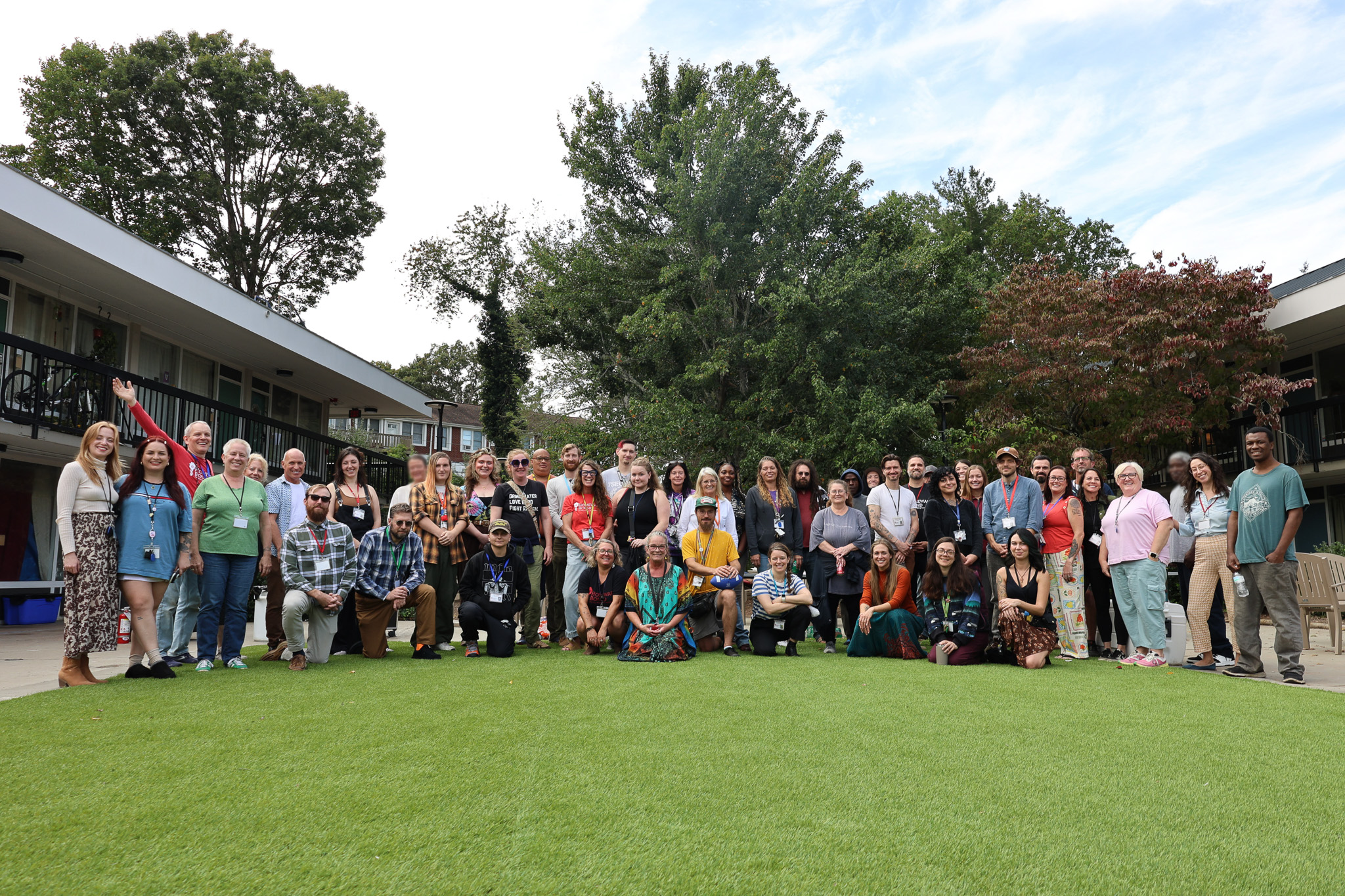
Homeward Bound staff and clients gathered for a grill-out to celebrate the second anniversary of Compass Point Village. Compass Point Village welcomed its first resident on September 21, 2023.
Research shows that stable and healthy relationships are not only a source of happiness but also a key determinant of health, resilience, and longevity. That’s why Homeward Bound provides Housing Case Managers—because helping someone transition from a state of crisis to stability is just as important as providing a home.
For Barbara, housing and genuine support have given her the space to heal, find answers to long-held questions, and recover from painful experiences.
As a young adult, Barbara envisioned a different future for herself. At 19, she married and moved in with her husband. Soon after they had their second child, however, he began drinking and became violent. Barbara tried to make it work for the sake of her children, but the abuse worsened and often occurred in front of them. They eventually divorced, but in suspicious circumstances, her ex-husband was awarded full custody of their children. Barbara says this caused her to lose her mind.
“I felt like everything I was meant to be and do in this life—a mother, a wife—was taken from me,” she says. “I put my head down and started to work a lot, doing everything to make the hole in my heart and soul go away.”
Soon after losing custody, Barbara was diagnosed with fibromyalgia—an incurable chronic disorder characterized by widespread pain, fatigue, sleep problems, and cognitive difficulties. She continued working construction jobs to support herself and stay close to her children, but eventually the symptoms became too much to handle. Barbara lost her apartment and became homeless at 30 years old.
During this time, Barbara was introduced to methamphetamine, which she says relieved both her emotional and physical pain. For many people experiencing homelessness or other traumatic situations, substances often become a way to relieve pain when nothing else seems to work.
Homeless and living under the Lexington bridge, Barbara took the chance offered by Sunrise Community for Recovery and Wellness to move into a hotel. She stayed there for a year while they helped her connect with housing, and it was during this time that she was introduced to Homeward Bound.
Homeward Bound worked to find the right home for Barbara, placing her in two other residences before she moved to Compass Point Village. Each step brought her closer to stability, but it was the security and wrap-around services at Compass Point Village that allowed her to thrive.
Barbara
Barbara credits her stability to several factors: the safety and security of Compass Point Village and a treatment plan with our on-site clinical partner, Appalachian Mountain Health, which finally relieved her pain. She says it took doctors more than 10 years to find a complete answer to her chronic pain.
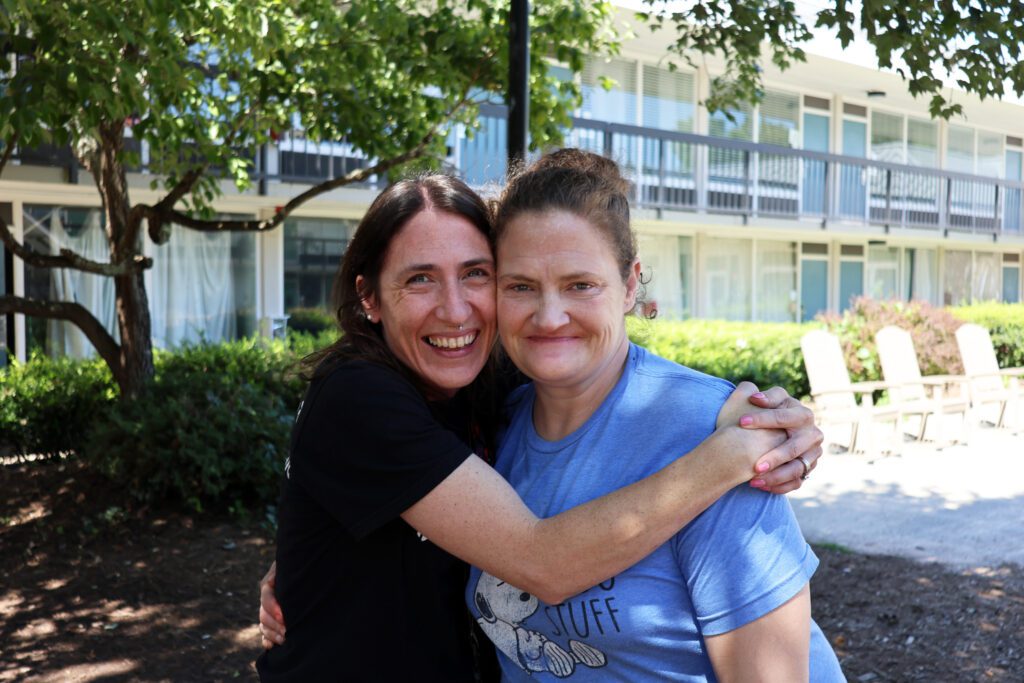
With stability in housing and health, Barbara has been able to focus on her recovery from substances and the things that bring her peace. She reads, sews, and looks forward to the art groups at Compass Point Village. She cherishes the relationships she has built—with her mother, neighbors, staff, and especially her Case Manager, Amanda. Barbara says she and Amanda “clicked like sisters.”
In their time working together, Amanda says Barbara has remained strong despite everything she’s been through.
“She’s been housed at Compass Point Village for almost two years because of her growth. That in itself is a huge accomplishment. Little or big wins for my clients and watching them grow is why I do this work. This opportunity to hear her story again and be a part of it makes me remember why I enjoy this job in the first place. Barbara is one of my many clients who keeps me motivated and happy to continue doing what I do.”
Amanda adds, “She can find joy in so many things, and sometimes she just giggles and laughs. Just the sound of her laugh makes me laugh.”
Barbara hasn’t seen her children in several years and holds onto hope that they will one day reconnect. Still, she’s proud of the progress she has made.
“I’ve learned to stick up for myself and stand up for myself, and let people know what I need,” she says. “I’m glad to have a place where I can be me. I’ve got a little more to go, but I’m on the way, and I’m happier now than I was a couple of years ago. If it wasn’t for Homeward Bound, I don’t know where I would be.”
CONTACT: Jessie Figueroa, Resource Development Director | (828) 793 – 0072 | Jessie@HomewardBoundWNC.org Abby Nelson, Development Officer | (828) 782- 0016 | AbbyN@HomewardBoundWNC.org
August 20, 2025: For Immediate Release
Harmonies for Homes: Homeward Bound Fall Benefit Concert Returns to Asheville
ASHEVILLE, NC – Music lovers and community supporters are invited to mark their calendars for Harmonies for Homes, a special benefit concert taking place on Sunday, October 26, 2025, from 3 PM to 10 PM at The Grey Eagle in Asheville, NC. All ticket and silent auction proceeds will benefit Homeward Bound of WNC’s mission to prevent and end homelessness through permanent housing and support.
The family-friendly event will take place across both the indoor and outdoor spaces at The Grey Eagle and will feature eight incredible bands: Coconut Cake, Las Montañitas, Eleanor and Friends Electric Band, Rahm Squad, Dr. Funky Squirrel, After Ours, Hype Machine, and King Garbage.
“We’re stoked to bring together such an incredible line-up of local talent,” says Rahm Squad bandleader, Rahm Mandelkorn. “Harmonies for Homes is about turning the energy of our scene into something that truly lifts people up.”
Between sets, don’t miss the silent auction featuring items donated by local businesses and community members, including: Journey Massage, Hot Yoga Asheville, Asheville Symphony, Asheville Music Hall, Harvest Records, and more!
“We are deeply grateful for the incredible support from our local musicians and community,” says Homeward Bound Development Officer, Abby Nelson. “Asheville’s vibrant music and arts scene is one-of-a-kind, and we’re honored to collaborate with so many local businesses that believe in our mission. This event is a true celebration of music, community, and the spirit of Asheville.”
Event Details:
Date: Sunday, October 26, 2025
Time: 3:00 PM – 10:00 PM
Location: The Grey Eagle, 185 Clingman Ave, Asheville, NC 28801
Features: Eight live bands, indoor/outdoor venues, silent auction
Audience: Family-friendly, all ages welcome
Tickets: $25 Advanced | $30 Door Get your tickets here!
Additional details about participating silent auction items will be announced in the coming weeks.
Harmonies for Homes is made possible through the support of our presenting sponsors: Fred Anderson Subaru, Moxy Hotel, Aloft Hotel, Infinity Wealth Management, and Town and Mountain Realty.
About Homeward Bound: Homeward Bound of WNC’s mission is to prevent and end homelessness in our community through permanent housing and support. Our work is anchored in the belief that housing is a human right. Our AHOPE Day Center serves as the front door to services for individuals experiencing homelessness. We offer prevention, rapid re-housing, and permanent supportive housing to help neighbors find stability. Since 2006, we’ve moved over 2,658 people into their own homes. In 2024 alone, 96.5% of people in our Permanent Supportive Housing Program remained stably housed and did not return to homelessness.
For more information about Harmonies for Homes, contact Homeward Bound’s Development Officer, Abby Nelson, at (828) 782 – 0016 or AbbyN@HomewardBoundWNC.org
Jeff is one of the toughest people I’ve met. He spent years taking care of himself—first as a kid on the streets of Buffalo, New York, then in the Army repairing tanks, and later as a plumber. He was used to standing on his own. But when his health began to decline and hospital bills piled up, things started to fall apart. Multiple strokes and heart attacks forced Jeff to quit plumbing, and without a steady income, it became harder to keep up with basic needs and maintain his own housing.
The first time Jeff became homeless, he was recovering from a stroke in the hospital. While still healing, he was kicked out of his home by someone he considered a friend—a person who had once promised Jeff a permanent place to stay. While living at the Veterans Restoration Quarters, that same friend reached out, saying he had lost his job and needed help caring for his home and daughter. Grateful to leave the shelter and willing to give him a second chance, Jeff accepted the offer. But once again, he was kicked out—this time during Hurricane Helene.
The instability took a toll on Jeff’s emotional and physical health. After the Veterans Restoration Quarters (VRQ) was damaged during the storm, Jeff had no choice but to live in his car. The stress of being 70 years old, in declining health, and facing housing insecurity was overwhelming.
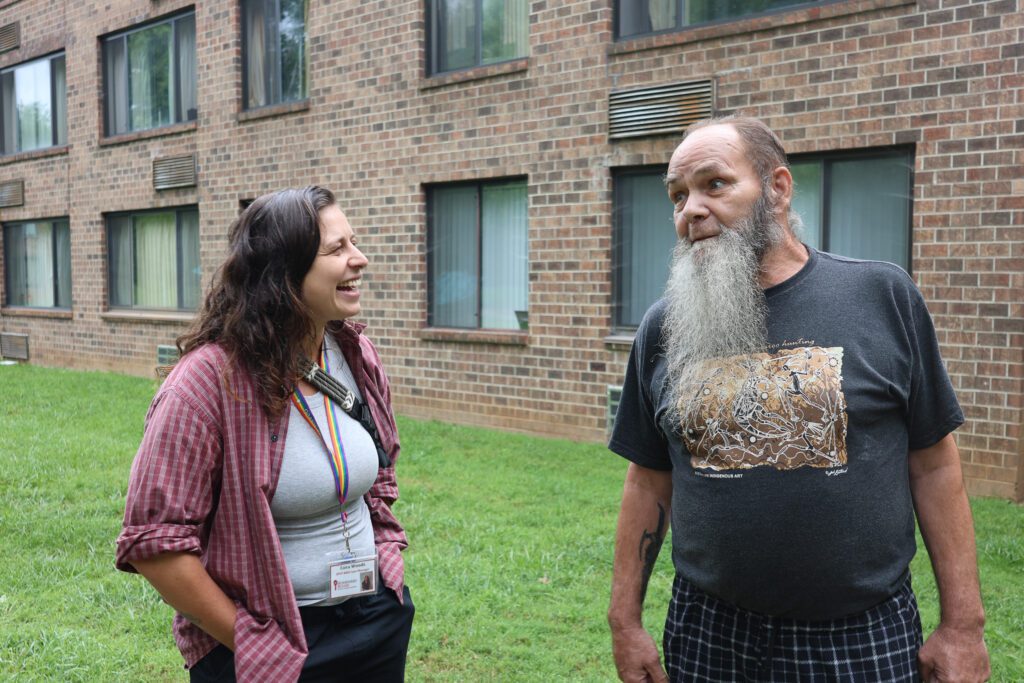
Fortunately, Jeff contacted Buncombe County Veteran Services and was connected with Homeward Bound’s Supportive Services for Veteran Families (SSVF) program and his Case Manager, Cora. Jeff says Cora was “the best thing that ever happened to me.”
Still, accepting help wasn’t easy. Jeff grew up in a low-income neighborhood, where he learned early that survival meant relying on yourself.
“I’m the type of person who helps people. I don’t ask for help,” Jeff says. “I’m from the streets where you don’t ask for anything. You take what you want and fight to keep what you have. It’s pretty simple.”
Though he knew he needed support, it was hard to accept it. The turning point came through his Case Manager’s patience, consistency, and genuine care.
Jeff
“She would not give up,” Jeff says. “She would tell me, ‘You deserve this help.’”
Once Homeward Bound moved Jeff into his apartment, things began to change.
“It’s tough not to have a place to lay your head—somewhere safe and secure,” says Cora, who’s seen other Veterans, Jeff included, become more relaxed and at ease once they moved into their own homes.
Today, Jeff lives a peaceful life. He enjoys caring for his home, listening to Black Sabbath, tending to his plants, cooking whatever he wants, and being with his friends.
“I get to shower every day, I get to clean up, I get to make my bed—and yes, that’s important to me, that I make my bed every day.”
Jeff has since been successfully exited from the program. He credits his stability to Cora’s support and kindness.
“She could train people; she just can’t teach the compassion she has—because she has a world of compassion.”
Jeff’s story reminds us that needing help doesn’t make you weak—and when support is given with patience and respect, it can change everything.
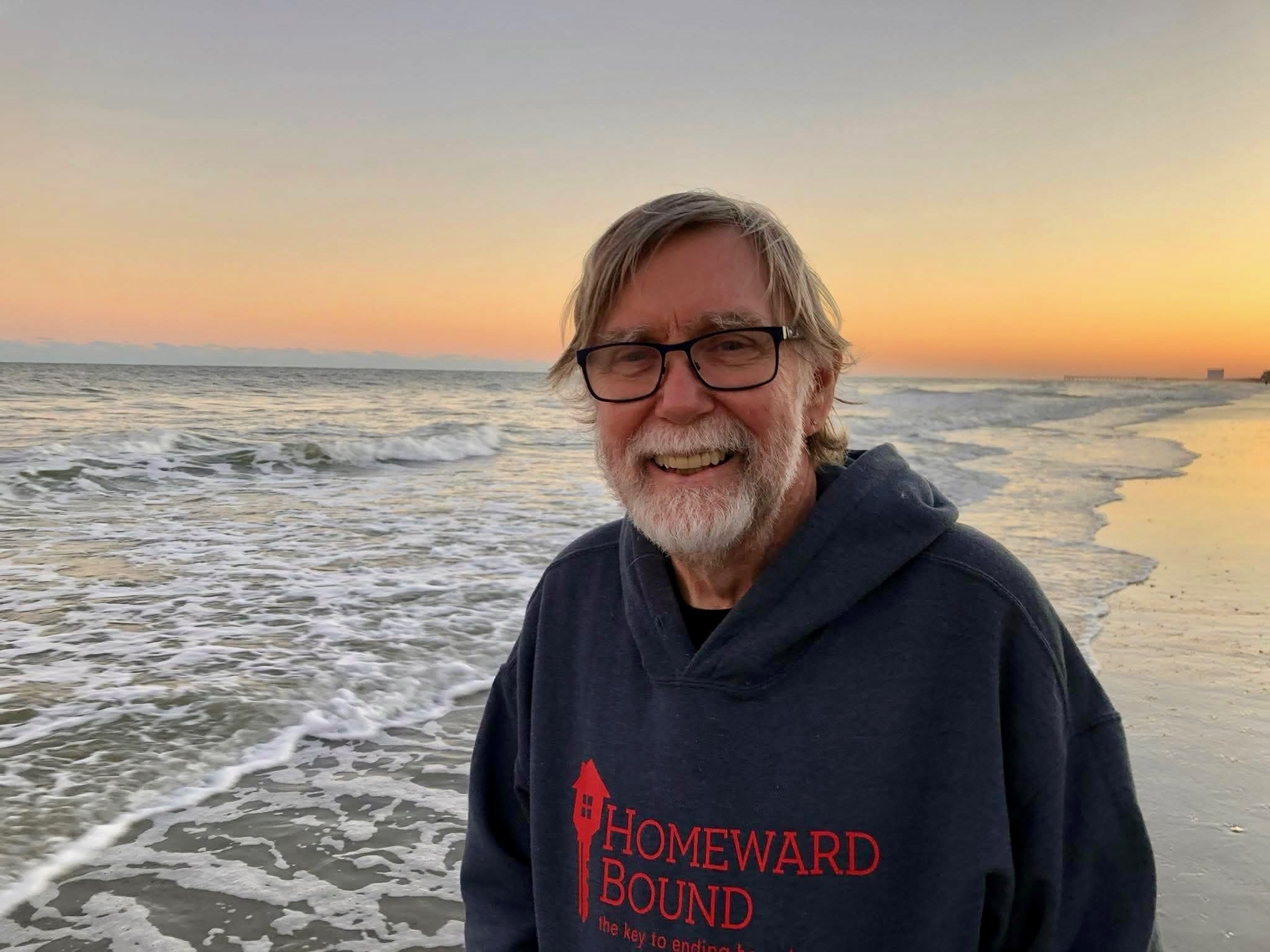
We are writing to share the news of the passing of our community’s beloved Jim Lowder. Jim was a dedicated and passionate leader, and the Homeward Bound family is deeply saddened by his loss. For 13 years, Jim served as a pillar of our organization’s success as our Development Director, Interim Executive Director, and Director of Strategic Gifts. His contributions to our organization were invaluable, and the relationships he developed often turned into lasting friendships for so many of us. You may read his obituary here.
We will miss Jim’s unique ability to offer compassion, hope, and joy to those we serve, often reminding us that we are all part of one human family. Upon his retirement in 2024, Jim shared,
“Working to end homelessness has been part of my life since I finished college in 1969…It has been a tremendous honor working with the residents, staff, volunteers, and donors here with Homeward Bound, especially developing best practices both with our programs and with our fundraising. I also came to appreciate the enormous generosity of the Asheville area community.”
Jim changed this organization and the lives of both staff and people experiencing homelessness not just because of what he did, but because of who he was.
Jim’s final project with Homeward Bound was leading our Home is Key Capital Campaign, raising over $16 million for Compass Point Village, Buncombe County’s first motel conversion into 85 units of permanent supportive housing.
Jim’s family has scheduled a memorial service on Saturday, August 30 at 1pm at First Congregational United Church of Christ, located at 20 Oak St. Asheville, NC 28801. In lieu of flowers, they have requested donations to the James Lowder Fund for Ending Homelessness.
James Lowder Fund For Ending Homelessness
With blessings from him and his family, we have established the James Lowder Fund for Ending Homelessness to honor Jim’s legacy. This endowment fund supports the future of Homeward Bound of WNC and continues Jim’s passion to provide stable housing and support to our most vulnerable neighbors in Western North Carolina.
Endowment Match:Two generous donors have provided a gift match of $20,000. Every dollar raised will be matched to maximize the impact you can make to ending homelessness in our community.
*Please note the “James Lowder Fund for Ending Homelessness” in the memo line.
Homeward Bound offers our deepest sympathy to the family and friends of Jim during this time. A memorial service is being planned for a later date to be determined, and Homeward Bound will share that info as we receive it. We welcome the opportunity to connect about Jim’s legacy, the memorial fund, or the impact Jim made to your own efforts to prevent and end homelessness.
The Asheville-Buncombe Continuum of Care approved its 2025-2028 strategic plan to address homelessness in Asheville and Buncombe County. Read more about the Continuum of Care here.
Tiffany has fought hard to find her sense of self-worth and belonging. She remembers how isolating it felt to be raised with two older brothers who were the stars of her family’s eyes, and no matter how hard she tried, she was treated as an outcast and black sheep. Sick of the neglect, Tiffany decided to run away from her small town. Without a support system, she became homeless at 17 years old.
By age 30, Tiffany was chronically homeless, spending each day of the last three years of her life outside. Over time, this worsened her feelings of shame and isolation.
“I was accustomed to thinking I was nothing,” shares Tiffany. “I wasn’t doing much of anything that I was proud of. Now, I’m doing good and I know it.”
Tiffany was first introduced to Homeward Bound in 2010, not long after moving to Asheville in search of a second chance. She remembers meeting Amanda Thomas, a long-time Homeward Bound staff member who became her first Case Manager. “Amanda has seen how far I’ve come—she’s seen the beauty that’s come out of my story.”
Tiffany moved into her first home in 2011, but transitioning out of homelessness isn’t always linear. Like many of us, her sense of stability depended on her surroundings—and the right housing placement made all the difference. With continued support and a home that truly meets her needs, Tiffany has found her footing. Thanks to Homeward Bound’s HACA program, she has now been stably housed for nearly two years.
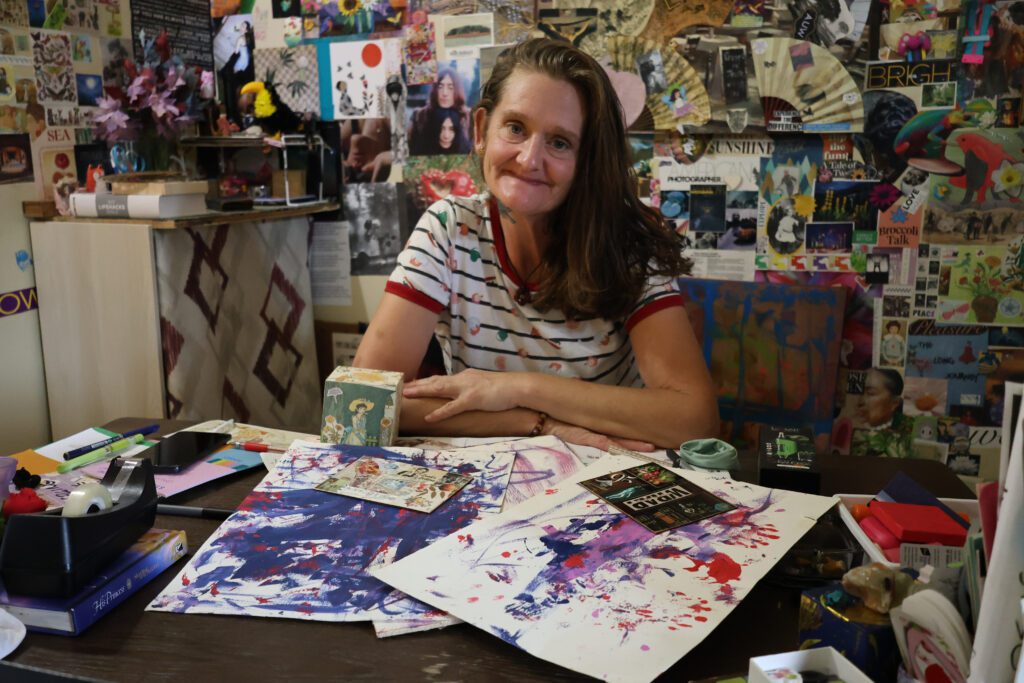
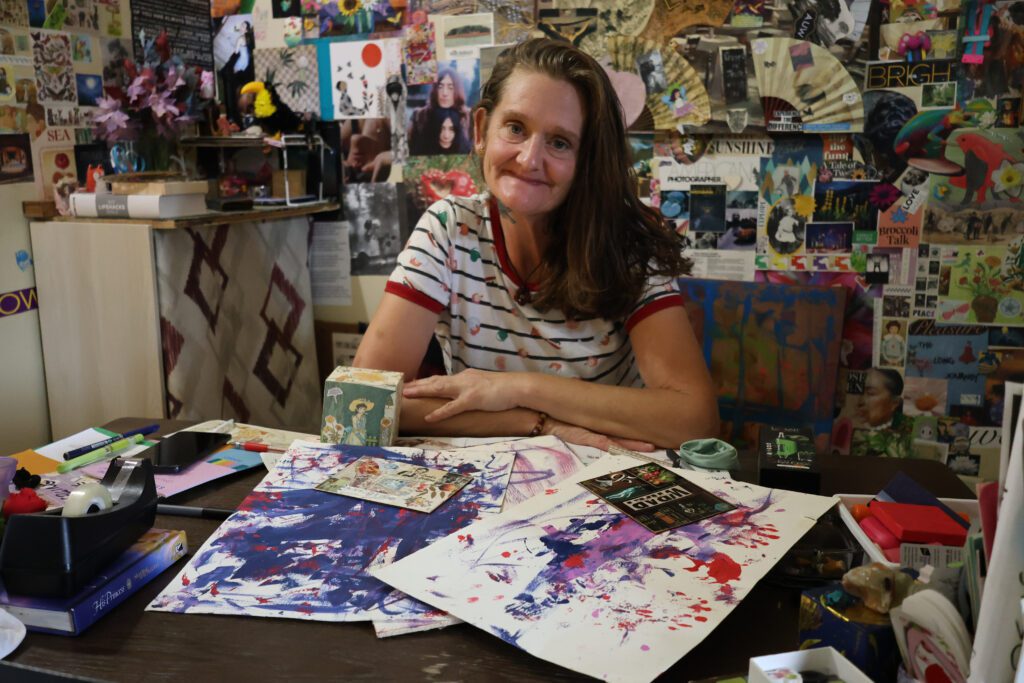
Tiffany and her art room.
“Homeward Bound never gave up on me. They never did. And it’s been nothing but great for me. I’ve got a sense of belonging. I have a sense of security. I call it my sanctuary because I get to make decisions in my life today. I get to say who comes in and out of my house. And having that freedom and independence is just absolutely the best feeling. A euphoric feeling comes over me every time I put my key in my lock.”
Tiffany has found joy in her home. She loves cooking in her kitchen, relaxing on her back porch, creating collage art, and spending time with her dog and best friend, Mystical. In addition to having her own space, Tiffany’s relationship with her current Case Manager, Zoey, has been transformative. Tiffany shares that it took time to build trust, especially given a difficult relationship with her mother.
“She showed me how to present myself, how to advocate for myself. Zoey tells me, ‘Tiffany, it’s okay to say no. No, period.’ I never thought I could say that. I always felt like I had to please somebody.”
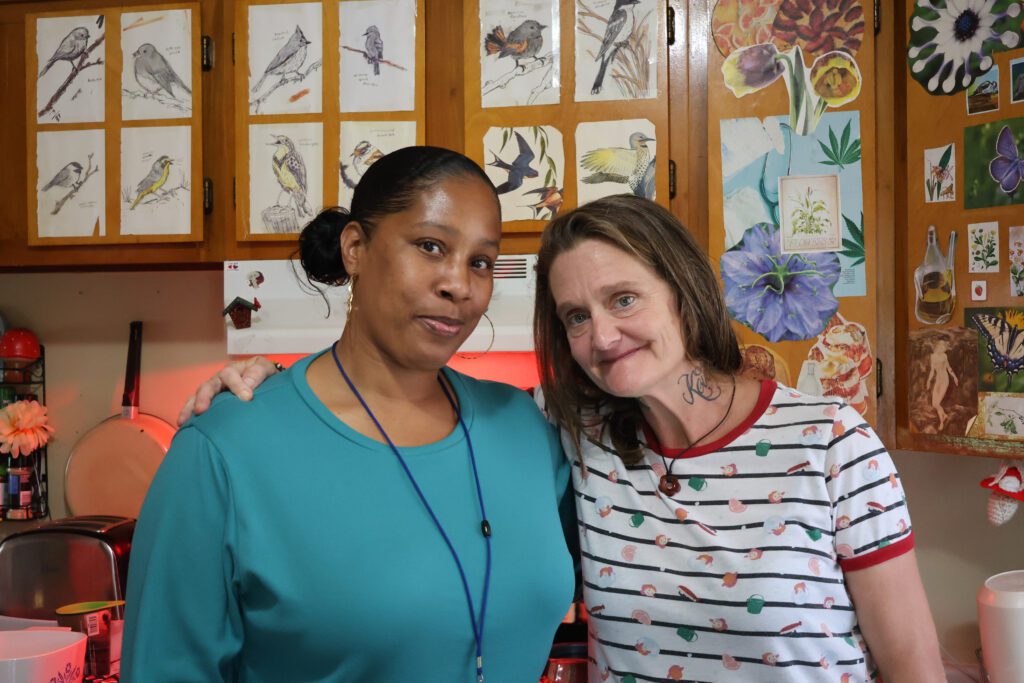
“You know I had to include my girl, Tiffany.”
With this new confidence, Tiffany feels stronger than ever—able to speak to her property manager, navigate appointments, and live on her terms. She wants to use her stability to become a peer support specialist and use her story to help others, especially women escaping domestic violence or navigating life after homelessness.
“Whatever comes my way, if I can help them—that’s what I want to do. I want to give back because it was so freely given to me. I want to shout my story to other women and tell them they can do it too. There are some beautiful, strong women out here who deserve as much as I got and more.”
Above all, Tiffany wants Asheville to see the humanity in every person experiencing homelessness.
“These people out here on the street—they’re amazing people, and they deserve a chance. What you see isn’t always the whole story. Take the time. Sit down and talk to one of us. I think it would change your whole outlook.”
Tiffany plans to set up an art display next to an alcove on a street in downtown Asheville where she used to sleep. She hopes to turn a part of her journey into something inspiring.